
If you’re not a fan of cardio or hitting the gym, you might find yourself wondering, “Can I just stretch to lose weight?” Well, weight loss is a bit more complex than that. It involves a mix of healthy habits, especially around food and exercise.
Stretching is definitely one of those habits worth developing. It plays a key role in your fitness routine—not just for making your body more flexible, but for helping you recover from workouts, improve mobility, and reduce muscle tension.
So, can stretching help you lose weight? Not on its own. But when combined with other exercises, stretching supports weight loss by helping your body recover and stay flexible. It also keeps your muscles relaxed, which helps prevent injury and keeps you feeling good.
Think DERR: Diet, Exercise, Recovery, Rest
If you’re serious about shedding some pounds, keep DERR in mind—Diet, Exercise, Recovery, and Rest. Developing good habits in all four areas is key to improving your health, both physically and mentally.
Stretching fits under the recovery category and is a critical piece of the puzzle. That means you shouldn’t skip it. It helps your body unwind, repair, and get ready for the next workout.
Does Stretching Burn Calories?
Every movement burns calories—even walking down a hallway. But if you’re looking for something that burns a lot of calories fast, stretching isn’t it. That said, it’s still a super important part of your wellness routine.
You can stretch any time—maybe a quick 5-minute session when you wake up or a longer one after your workout. Either way, your body will thank you.
Why Stretching Is So Good for You
Stretching feels great, but it also brings some real benefits to your body. Just a few minutes a day can make a big difference. Here’s what it can do:
- Relaxes muscles and reduces muscle soreness (especially after workouts)
- Improves your range of motion
- Helps with posture
- Boosts bone density
- Increases elasticity in muscles, ligaments, and fascia
- Enhances blood circulation
- Lowers the risk of injury
- Reduces stress
A Few Things to Keep in Mind
While stretching has tons of benefits, remember:
- It won’t help you lose weight on its own
- You shouldn’t rush or force a stretch
- It doesn’t replace cardio or strength training
Types of Stretching
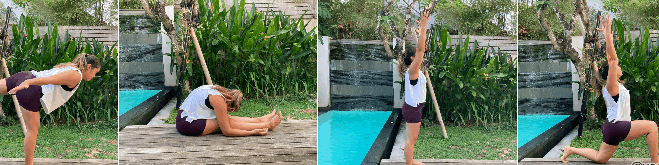
Not all stretching is the same. In fact, there are a few different styles. If you’ve taken a yoga class, you’ve probably done several types without even realizing it. Depending on your goal, you might prefer one over another. Here’s a quick breakdown:
1. Active Stretching:
No props needed—just you using your own muscles to hold a stretch. Think Warrior 3 pose.
2. Passive Stretching:
This involves using props like yoga blocks, straps, walls, or even the floor to help you stretch without much effort.
3. Dynamic Stretching:
This type gets you moving through your full range of motion—great as a warm-up. Doing a few Sun Salutations is a classic example.
4. PNF Stretching (Proprioceptive Neuromuscular Facilitation):
This involves tightening a muscle, then relaxing into a deeper stretch. It’s one of the most effective ways to improve flexibility. Poses like Low Crescent Lunge or Half Monkey are great for this.
Is It Okay to Stretch Every Day?
Absolutely! Daily stretching is perfectly safe—as long as you’re not pushing yourself too hard. Flexibility doesn’t happen overnight, especially since you’re working with tissues like tendons and fascia, which take time to adapt.
Stay consistent and listen to your body. If something hurts sharply, ease up. You might not be flexible right now, but that’s exactly why you should start stretching!
Does Stretching Tone Your Body?
Stretching not only lengthens your muscles—it can also help tone them. Yoga is a great example. It involves both stretching and strength work, which over time can make your body look leaner and more sculpted.
Practicing yoga regularly can help you feel longer, stronger, and more toned, thanks to the muscle activation and lengthening involved in the poses.
Stretching vs. Yoga
Stretching and yoga often look similar, but they’re not quite the same. You can stretch without doing yoga, but yoga is more than just stretching—it’s a mindful, spiritual, and physical practice rolled into one.
Stretching is something you can do casually anytime. Yoga, on the other hand, is typically more intentional and connects movement with breath and awareness. So while many yoga poses involve stretching, yoga goes a lot deeper.
Can Yoga Help With Weight Loss?
Yes, certain types of yoga can help you lose weight. But the cool thing? Once you start practicing yoga, you’ll discover it offers way more than just physical benefits.
If weight loss is your goal, these styles might be worth exploring:
- Hot Yoga (Bikram):
Claims up to 1,000 calories per 90-minute class, but studies show it’s closer to 330 due to elevated metabolic rate. - Vinyasa Yoga:
A breath-synced flow with creative sequences. It’s physically demanding and burns around 550 calories per session. - Ashtanga Yoga:
A structured, athletic practice that’s similar to Vinyasa. It can burn 450–550 calories per class. - Inversions & Arm Balances:
These moves rev up your system and add extra calorie burn—about 45 calories per 10 minutes.
Combining Yoga With Other Workouts
Yoga is often blended with other workouts these days, creating some really fun and effective hybrid routines.
Yoga + HIIT:
High-Intensity Interval Training + yoga helps you torch calories and build strength fast. Try movements like:
- Downward Dog to Plank body rolls
- Three-legged Dog to Knee-to-Nose
- High Lunge to Low Lunge transitions
Yoga + Weights:
Adding resistance amps up the benefits. Try:
- Warrior Pose with bicep curls
- Mountain Pose to Upward Salute holding weights
- Tabletop leg kickbacks using ankle weights
Yoga + Socks:
Yes, seriously! Socks let you slide during poses, challenging your core. Just be careful not to slip. Try:
- Sliding from Downward Dog to Plank
- Plank to Side Plank holds
- Downward Dog to Fallen Triangle transitions
Other Ways to Lose Weight
Stretching helps support your fitness, but it’s not a magic bullet for weight loss. You’ll want to add in other key elements like:
Cardio:
Running, dancing, spinning—anything that gets your heart rate up. Aim for 2–3 sessions per week.
Functional Training:
This mimics everyday movements, but adds resistance (like bands or medicine balls). It’s one of the fastest ways to lose weight.
Mobility Training & Calisthenics:
No gym needed! Just your body and maybe a mat. Think gymnastics, acrobatics, or calisthenics. Great for building strength and flexibility.
Final Thoughts
Losing weight isn’t about just doing one thing—it’s about building a balanced lifestyle. That means focusing on your diet, exercise, recovery, and rest.
Stretching won’t make the pounds melt off on its own, but it’s an essential piece of the puzzle. Whether you stretch before your workout, after, or during a relaxing yoga class, your body will benefit in so many ways.
Make it a habit. Just a few minutes a day can make a big difference!
Leave a Reply