
Yoga is usually associated with being a relaxing, serene activity—it can be incredibly soothing, grounding, and therapeutic. But trust us, anyone who’s taken an Ashtanga or Power Vinyasa class will know that it’s not always so mellow. With the quick flows and demanding poses (hi, arm balances!), you can bet your body will feel it afterwards.
Definitely. When you’re doing more intense classes such as vinyasa, hot yoga, or power yoga, soreness can certainly appear. All those Chaturangas, planks, and core-working poses can cause you to be sore for a few days.
It’s particularly normal to be sore if you haven’t exercised in a while, you’re engaging muscles differently, or you’re just challenging yourself a bit more than normal. If you’re returning to yoga after time off or are doing a more challenging class, then there’s a good chance you’ll feel it the day after.
Is It Normal to Be Sore After Yoga?
Completely normal. It’s really quite normal to experience a little soreness or stiffness after a yoga class—no matter if it’s a quick-paced Vinyasa class or a deep-stretching Yin practice. You’re not alone in this at all; many yogis experience the same thing.
Some individuals presume that yoga will not leave them sore because it is a low-impact exercise. But whenever you are exercising muscles that you do not normally use—yoga being included—soreness is an inevitable result, although you are otherwise active.
Soreness vs. Pain After Yoga
There’s a huge difference between sore and pain. Some soreness is to be expected when you’re holding a position for some time, particularly as your body gets used to it. But pain? That’s your body telling you to back down.
- If you notice something stabbing or sharp, come out of the pose immediately.
- If it’s a dull feeling or just plain annoying, you may be able to breathe through it and observe how your body reacts.
Practice makes perfect, and after a while, you’ll be able to distinguish between waking up your muscles and pushing too hard.
How Long Does Soreness Last?
Muscle soreness is typically brought on by small tears and swelling in muscles that have not recently been used. It is normal—and transient. In most individuals, soreness persists for about 1–3 days.
If you feel sore after a yoga class, particularly if you attempted something new or engaged different groups of muscles, don’t fret. That soreness will dissipate in a couple of days. Meanwhile, pay attention to your body. You may require rest, a massage, or perhaps a less strenuous practice.
Can You Still Do Yoga with Sore Muscles?
Even when your muscles hurt, a gentle yoga practice can even benefit you. The slow movements and gentle stretching can reduce tension and bring in more blood flow, which enhances the recovery process.
- The first few minutes may be painful, but as your muscles get warm, that tightness will probably subside.
- Experiment with something like Yin or Restorative yoga—these more leisurely forms of yoga can assist you with stretching, unwinding, and releasing that soreness.
How to Ease Sore Muscles
In addition to restful yoga, there are several other things you can do to alleviate muscle soreness:
1. Rest
- Get 8 hours of restful sleep to allow your muscles time to recover.
- After a challenging class, a good night’s sleep can be a big help.
2. Nutrition
- Eating nutritiously aids in your recovery.
- Fuel up after class with a balanced meal.
- Some also increase protein intake—eggs, beans, tofu, meat, or nuts come to mind.
Other beneficial foods include:
- Coconut water: Contains electrolytes, potassium, and magnesium.
- Fish: High in omega-3s and excellent for protein.
- Cherry juice: A natural anti-inflammatory and excellent for soothing muscle soreness.
3. Stretching
- If you don’t have time, some simple stretches in the morning or evening can make all the difference.
- Find stretches for the areas you’re sore and work through them slowly.
4. Stay Hydrated

- Hydration is absolutely crucial for recovery of electrolytes and muscle.
- Water is a necessity.
- Don’t neglect the importance of electrolytes if you tend to sweat heavily.
- Squeeze lemon, mint, or ginger into your water.
5. Take a Walk
- One of the easiest ways to loosen up tight muscles without overdoing it is to take a walk.
- Keep it slow. Steady. Just find the movement enjoyable.
6. Massage
- Treat yourself to a professional massage or even give yourself one at home.
- Use a foam roller, essential oils, or something like Tiger Balm to relax into sore areas.
- If you’re under the care of a professional, inform them where you’re sore so they can modify accordingly.
How to Prevent Sore Muscles
Waking up sore can be brutal, but there are measures you can take to minimize or even eliminate muscle soreness altogether:
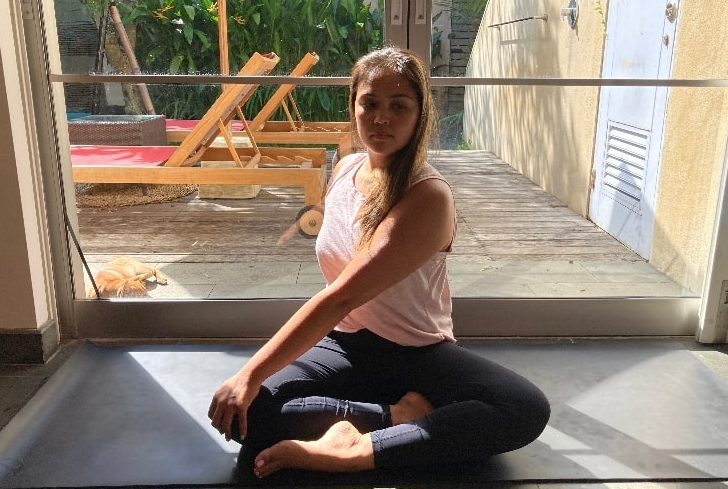
Warm-Up First
- Missing warmups is an easy error, and it usually results in injury or soreness.
- Always warm up for 10–15 minutes before jumping into any exercise routine.
- If you are in a yoga class, your instructor will most probably incorporate this.
- If you’re doing it alone, begin with some Cat-Cows, Child’s Pose, or some light flows to get your body ready.
Cool Down Properly
- Just like warming up, cooling down is essential.
- A few stretches after your workout help relax muscles and prevent tightness.
- Take five minutes to stretch and wind down—you’ll thank yourself later.
Focus on Alignment
- Poor alignment can lead to unnecessary soreness by straining the wrong muscles.
- Pay attention to your teacher’s cues and don’t hesitate to ask for help if you’re unsure about a pose.
- Correct form makes a big difference.
Hydrate During Class
- Make sure you’re sipping water throughout your practice, especially during intense classes like Hot or Power yoga.
- Staying hydrated helps your body handle the heat and physical effort.
Listen to Your Body
- Always listen.
- If it feels yucky or hurts, stop and try to change.
- Don’t push your body into the shapes it’s not yet capable of.
- Stay centered with your breath and move in a manner that feels best for you.
Related Questions
Can you lose weight with yoga?
Yes, it can—particularly if you’re practicing on a regular basis and opting for more energetic styles such as Vinyasa, Power, or Ashtanga yoga. Complement it with a good lifestyle and eating habits for optimal benefits.
How frequently should I practice yoga to see results?
Consistency is the key. Practicing 3–5 times a week will be far more beneficial than once a week. Even brief, frequent sessions can significantly change your mind and body.
Leave a Reply