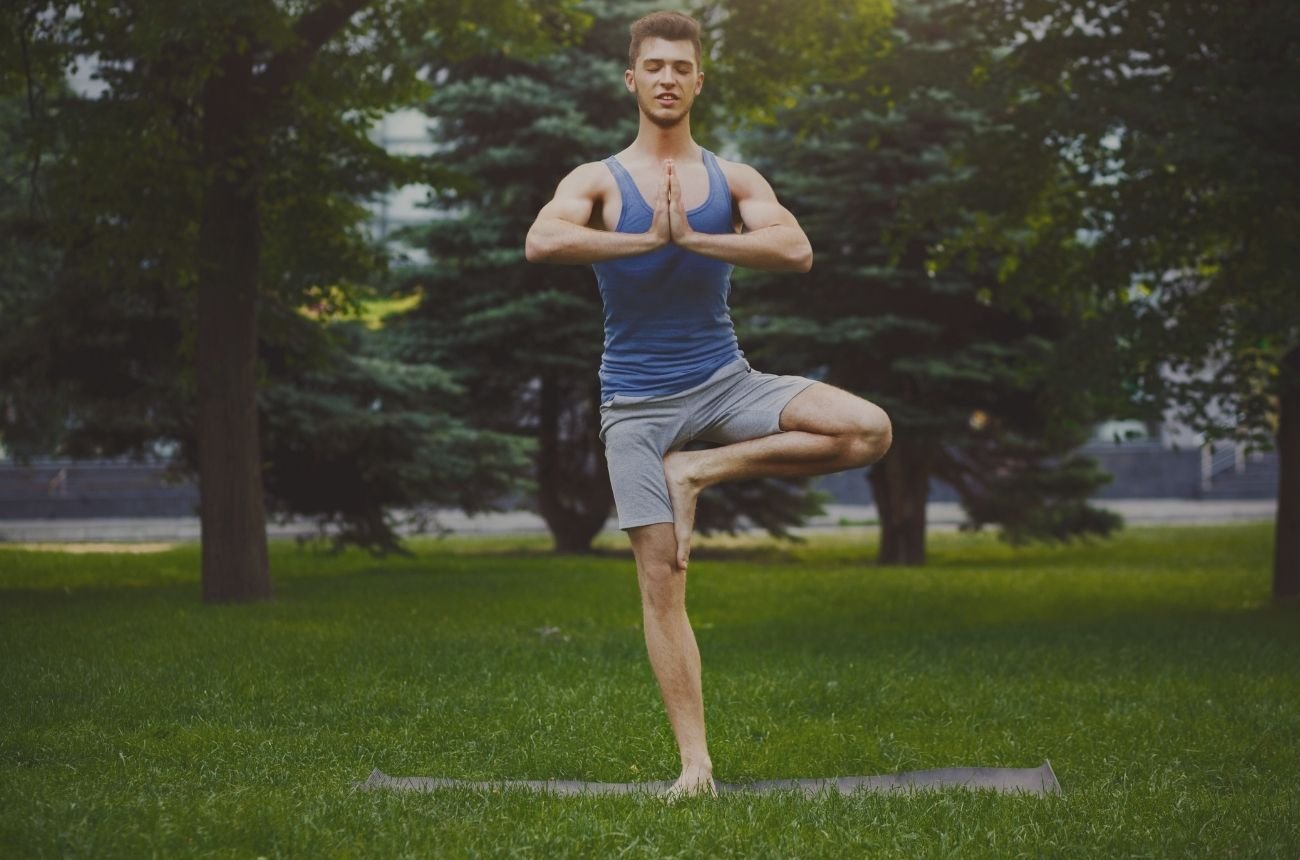
Tree Pose—a favorite yoga posture of ours—is easily recognizable and something all yogis practice. Tree Pose requires balance, strength, and flexibility, and there are numerous variations to cater to every ability. You feel as strong and tall as a real tree when you’re in Tree Pose. This balance standing pose can leave you feeling centered, open, and expansive, and it’s a frequent visitor in both Vinyasa and Hatha classes.
Why Do Tree Pose?
Tree Pose can be a bit of a challenge when you first start practicing it. Getting your balance might take some time, but after you get used to it, the experience is truly rewarding. This lovely posture has physical and emotional advantages that are numerous and varied, including:
- Assisting you to become more grounded—physically and energetically
- Increasing your concentration and focus
- Unloading stress and tension
- Relaxing body cramps
- Enhancing your general balance
- Strengthening your legs
- Increasing better alignment in your body
- Developing strength in your ankles and toes
Warming Up for Tree Pose
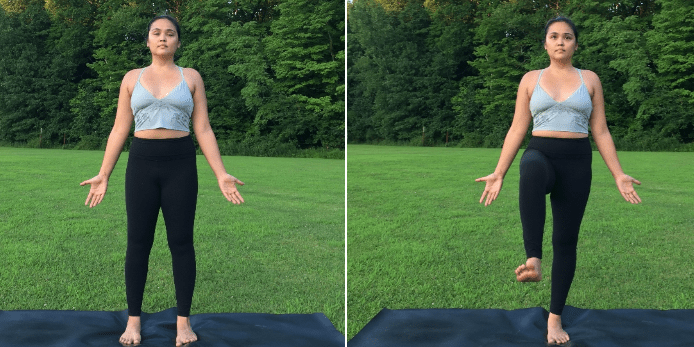
Because Tree Pose requires concentration, power, and stability, it’s advisable to warm up first. Some Sun Salutations and some prep balancing poses can work wonders. Here are two excellent poses to do before Tree:
Mountain Pose (Tadasana)
Begin by establishing a firm, stable base.
- Stand with feet hip-width apart, arms loose by sides
- Roll shoulders up, back, and down while expanding chest
- Feel yourself coming up from the waist, strongly grounding both feet
- Press your big toes and heels into the ground, activate your thighs by lifting your kneecaps, and hold your thigh muscles to the bone
One-Legged Mountain Pose
This is a great preparation for Tree Pose.
- From Mountain Pose, transfer your weight into your right foot
- Lift your left foot off the ground and bend your knee so that it’s at 90 degrees
- Bend your left foot and hold your arms at your sides
- Stand tall with your chest up, back straight, and right leg firm
- Hold for 5 slow breaths, then repeat on the opposite side
How to Do Tree Pose
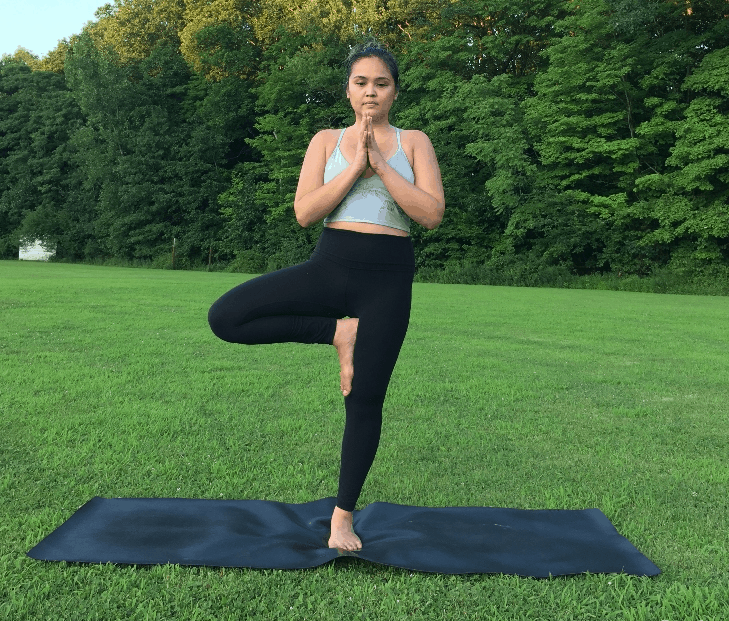
In order to develop strength and balance equally, make sure to practice Tree Pose on both sides of the body.
- Begin in Mountain Pose with your feet flat on the ground, legs engaged, and arms at your sides
- Transfer your weight to your right foot and lift your left foot up into One-Legged Mountain
- Use your left hand to spread your left knee out to the side
- Gently set the sole of your left foot on the inside of your right thigh, calf, or ankle—just not on your knee joint
- Engage your standing leg by lifting the kneecap and engaging the thigh. Press your right big toe and heel solidly into the mat
- Press your left foot into your right leg and your right leg back into your left foot—wrap everything towards the midline
- Bring your palms together at your chest with thumbs touching your sternum
- Roll your shoulders back and down, lifting your heart and keeping it open
- Gaze gently ahead or at your fingertips
- Hold for 5 breaths, then switch sides
Common Mistakes to Watch Out For
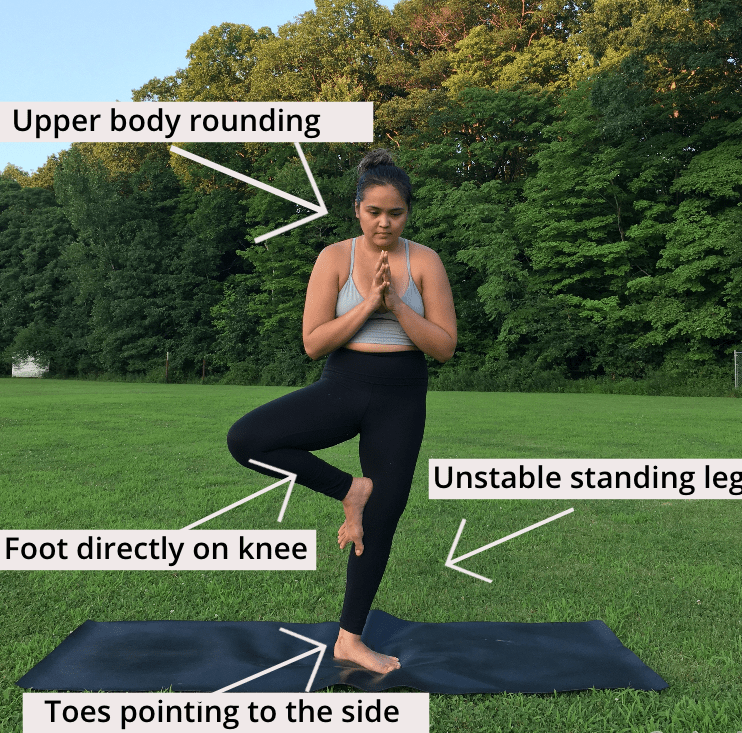
It’s normal to run into a few misalignments when learning Tree Pose. Here’s what to keep an eye on:
- Toes not pointing forward: Make sure your standing foot’s toes face straight ahead. This helps keep your hips and body in proper alignment
- Wobbly standing leg: If you’re feeling shaky, check if your thigh is engaged and the back of your knee is lengthened. Press down through the big toe and feel energy lifting through the leg
- Hyperextended knee: Avoid locking your knee backward. This puts stress on your joints without activating supporting muscles, which can lead to injury
- Foot on the knee: Never put your foot on the knee joint itself. Instead, place it above or below—on the inner thigh, calf, or ankle
Useful Modifications
If balance is challenging at the moment, don’t despair—use these modifications to make the pose more accessible:
- Lower your foot: Rest your foot on your calf or ankle (not your knee). If additional support is necessary, have your toes resting on the floor while the foot is resting on the ankle
- Support yourself with a wall or chair: Stand in front of a wall and put your hands on it for balance. Alternatively, stand beside or in front of a chair and hold on lightly
- Shift your gaze: If staring straight ahead is unstable, try to look at the floor a few inches in front of you. Slowly move your gaze upwards as you gain confidence
- Hands on hips: Instead of prayer hands at chest level, try putting your hands on your hips. This can keep you more stable and also involves your upper body
Beginner Tips
- Don’t be shy to adjust: If lifting your foot up to your thigh is uncomfortable, begin lower on the leg. With practice and patience, your flexibility will come
- Use your upper body: It’s convenient to pay attention only to your legs in balancing poses, but ensure that your upper body is equally engaged—chest expanded, shoulders wide
- Work on strength and flexibility: Open hips and hamstrings and a strong standing leg make Tree Pose much easier. Practice other yoga poses regularly to build up strength and mobility
Fun Tree Pose Variations
Looking to switch things up a bit? Here are some fun variations to try once you’ve found your balance:
- Arms overhead: Instead of palming together at your chest, stretch arms up overhead. Let shoulders relax and bring your heart up to the sky
- Side stretch: From arms overhead, drop one arm down and reach the other up and over for a slight side bend. Switch sides
- Backbend: Keep your arms up high and push your hips forward slightly, lifting through the chest and curving the upper back. Keep standing leg firm
- Eyes closed: If you feel stable, try closing your eyes for a few breaths. It’s an excellent test of your balance and concentration
A Quick Note on Safety
If you’re healing from a knee or ankle injury, be extra cautious in Tree Pose. Modify as needed or skip it altogether if it causes discomfort. Also, if you’re prone to dizziness or vertigo, take things slow and steady.
Wobbling a little bit is completely natural—particularly at the beginning. Tree Pose is all about discovering your balance, developing strength, and tapping into that planted, grounded power that trees have. Keep with it, and delight in the process.
Leave a Reply