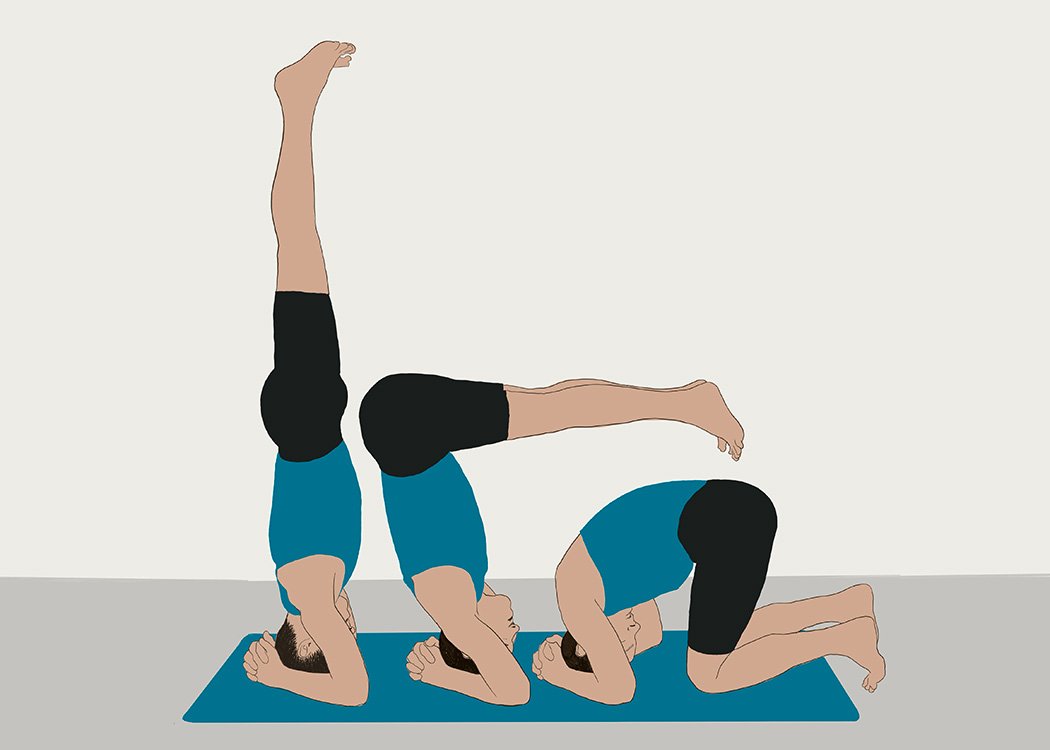
Known as the “King of Asanas,” the Headstand (Sirsasana) is one of yoga’s most challenging poses—but also one of the most rewarding. It’s an inversion, which means your head is below your heart when you’re in the pose. While your head supports some of your weight, your forearms should also do a lot of the work to keep your body stable.
Inversions can seem intimidating at first, and that’s totally normal. But with consistent practice and proper alignment, balancing upside down on your head becomes a goal that’s absolutely achievable. And once you start to feel more secure in the pose, you’ll likely notice a sense of calm and clarity while you’re up there.
Why Practice Headstand?
Headstand offers a ton of benefits—both physical and mental. Some of the key ones include:
- Eases stress and anxiety
- Strengthens the shoulders and forearms
- Helps manage headache-related pain
- Builds strength and length in the neck and spine
- Boosts blood circulation
- Strengthens your core
- Enhances concentration
- Helps relieve back pain
Warm-Up Poses for Headstand
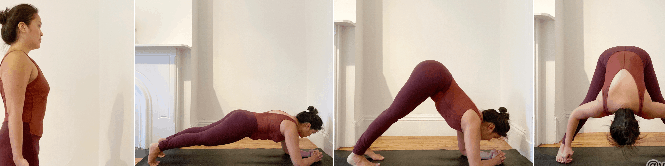
Because Headstand is an advanced pose, it’s best to practice it toward the end of your yoga session, just before your cool-down or Savasana. You’ll want your body to be fully warmed up and prepped. Here are some great postures to help you get ready:
🧍♂️ Mountain Pose
Think of Headstand as Mountain Pose flipped upside down. This pose helps you understand your body’s alignment and encourages strong, grounded legs.
- Stand with your feet hip-width apart and your toes facing forward
- Press your big toes and heels into the mat, engaging your thighs
- Roll your shoulders up, back, and down, keeping your chest open
- Let your arms hang naturally by your sides, palms facing forward
- Soften your gaze and take 5 deep breaths
💪 Forearm Plank
This is great for activating your core and upper body.
- Start in a regular plank, then lower one elbow at a time
- Interlace your fingers and press your forearms into the mat
- Keep your shoulders stacked above your wrists, and your core engaged
- Hold for 5 deep breaths
🐬 Dolphin Pose
Start from Forearm Plank and build more stability in your core and shoulders.
- Keep your forearms grounded and begin walking your feet toward your elbows
- Lift your hips so your body resembles Downward Dog
- Keep your head off the mat and look slightly forward, lifting your chin
- Relax your shoulders away from your ears and press down through your forearms and heels
- Draw your shoulder blades together down your back and keep lifting through your hips
- Lengthen your spine and hold for 5 breaths
🙇♂️ Wide-Legged Forward Fold
A great way to prep for a Tripod Headstand. This posture lets you feel the length through your spine and crown.
- Stand at the back of your mat, turn to the side, and step your right foot to the top
- Extend your arms to shoulder height, making sure your wrists line up with your ankles
- Keep your legs strong and thighs engaged
- Inhale to lengthen your spine, exhale to fold forward from your hips
- Place your palms on the floor right under your elbows, crown of the head reaching down
- Shift slightly forward into the balls of your feet while keeping your legs strong
- Breathe deeply for 5 breaths
How to Do a Headstand (Step-by-Step)
Don’t worry if it feels tricky at first—this is a pose that takes time, strength, and practice. Go step-by-step, stay patient, and keep your alignment in check.
- Start kneeling in the center of your mat, knees together, hips on heels
- Place your elbows on the mat and measure the distance by grabbing opposite elbows
- Keeping that distance, interlace your fingers on the mat to form a triangle
- Keep your palms slightly apart to make space for the back of your head
- Gently place the crown of your head on the mat and cradle it with your hands
- Keep your head and forearms grounded
- Tuck your toes and lift your knees
- Walk your feet forward so your hips rise and start stacking over your shoulders
- Push your forearms down, relax your shoulders, and keep your spine straight
- Slowly bend one knee into your chest, toes pointing upward
- Find your balance, then bring the other knee in, tucking both legs toward your chest
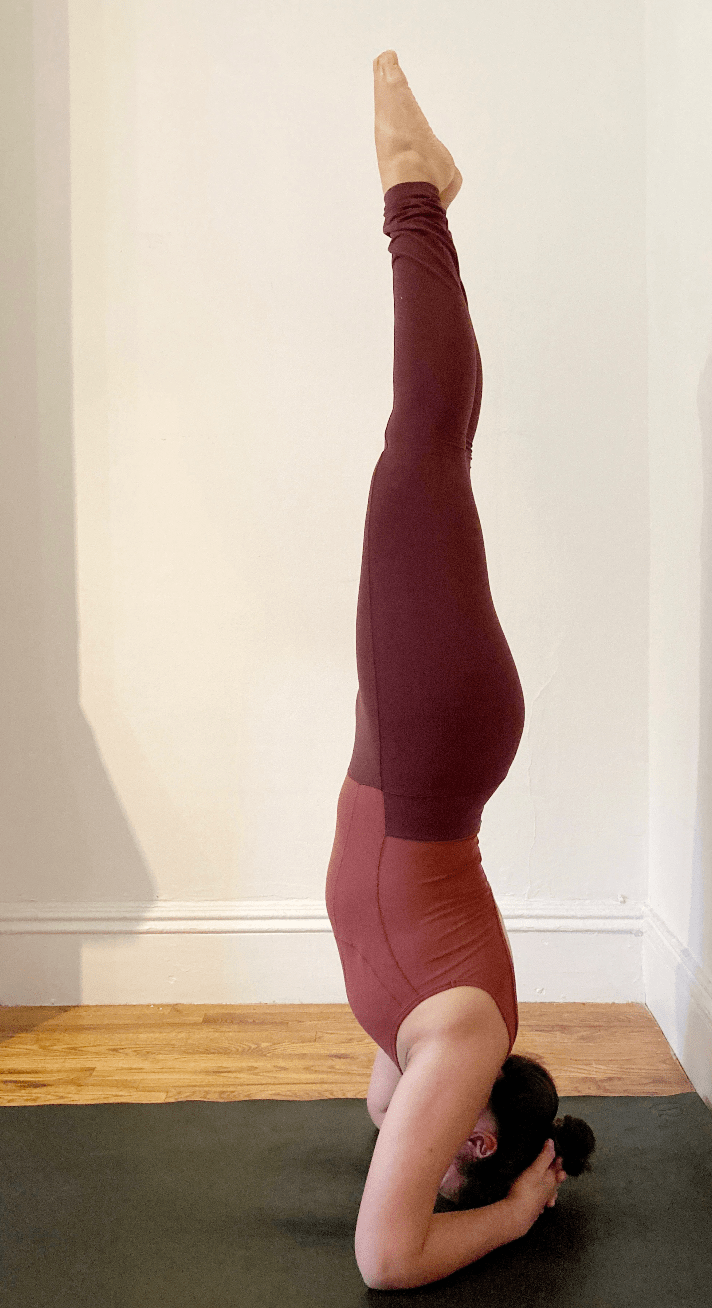
- When you feel stable, straighten both legs and point your toes toward the ceiling
- Engage your core, keep pressing into your forearms, and stack your joints
- Breathe slowly and hold for 5–20 breaths
Common Mistakes in Headstand (and How to Fix Them)
Mastering the Headstand means laying a strong foundation. Here are some frequent misalignments:
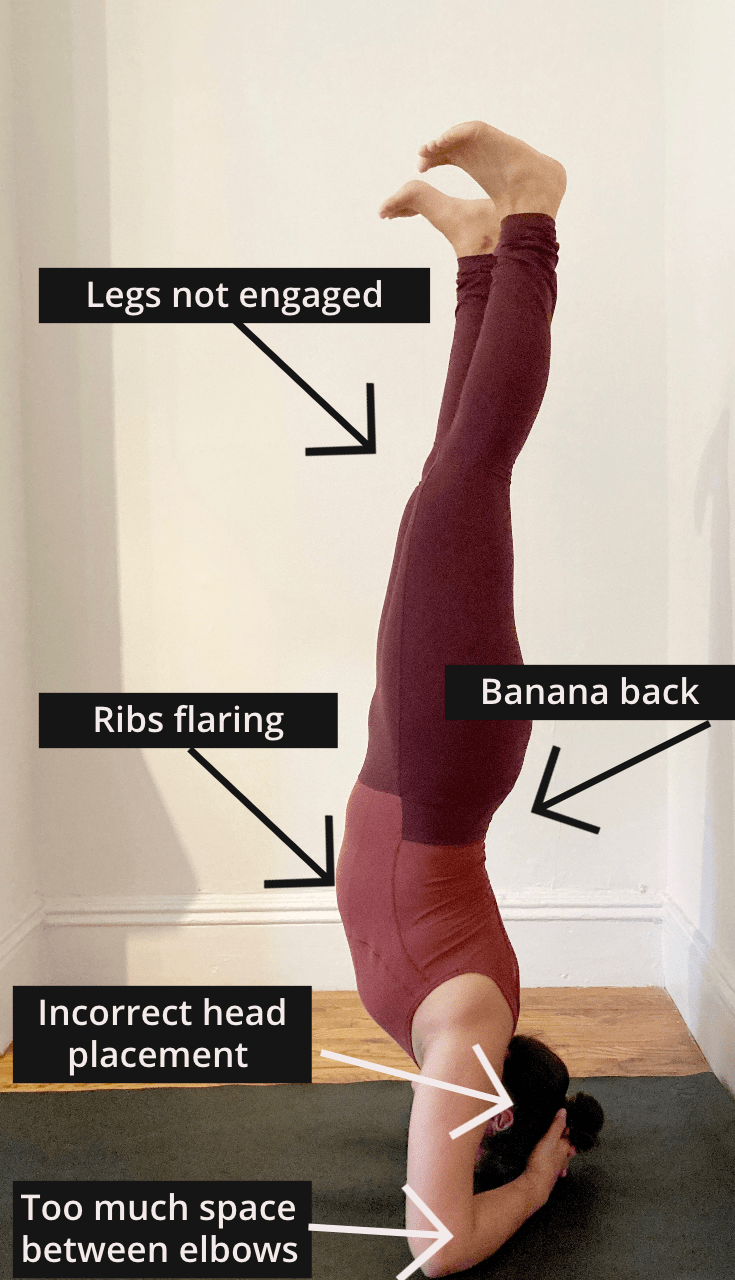
- Elbows too wide: Use the elbow-to-opposite-hand measurement trick and keep that distance throughout
- Wrong head placement: Make sure it’s the crown of your head on the mat—not your forehead or the back of your head
- Kicking up: Rather than using momentum, work on engaging your muscles and using control to lift
- Lower back compression: Make sure your ankles, hips, and shoulders are stacked. If your feet go too far back, you might end up with a “banana back”
Modifications for Headstand
Still working toward the full pose? No worries! Try these helpful modifications:
- Use a wall or partner: Practice near a wall or with a friend for support
- Keep knees tucked: Stay in the tucked position before extending your legs—it helps build core control
- One leg at a time: Practice lifting one leg first to understand your balance and body alignment
- Extra padding: If your mat feels too thin, use a blanket or double up your mat for comfort
Tips for Beginners
- Take it slow: Headstand can take months or even years to master—enjoy the process
- Focus on alignment: Being upside down can feel strange, so take your time finding proper alignment
- Strengthen other areas: Keep working on poses that build full-body strength and control
Fun Variations (Once You’re Ready!)
Already feeling stable in Headstand? Try these creative variations:
- Tripod Headstand: Start from a Wide-Legged Forward Fold. Place the crown of your head between your hands (which are flat on the mat). Lift your legs into the air, forming a triangle between your head and hands
- Upward Facing Staff: Instead of tucking your legs in, keep them straight and pike up, so your legs stay parallel to the floor—great for deep core engagement
Contraindications
If you have high blood pressure, spinal injuries, or heart conditions, it’s best to be cautious with Headstand. Some traditions also advise avoiding inversions during menstruation—listen to your body and do what feels right for you.
Headstand is an advanced pose, so if you’re just beginning your yoga journey, start with prep poses and take your time. There’s no rush—trust the process and enjoy exploring the world upside down!
Leave a Reply